School vision screenings can be a helpful first check, but they are not the same as a pediatric eye exam. Screenings are designed to flag possible vision concerns quickly, while comprehensive eye exams evaluate how well your child sees, how their eyes work together, and whether their eyes are healthy.
For parents, understanding the difference can help you know when a screening result is enough and when your child needs a closer look.
What does a school vision screening check?
A school vision screening is usually a brief test that checks distance vision. Your child may be asked to read letters or identify shapes on a chart from across the room.
These screenings can help identify children who may have trouble seeing the board, but they often do not test for every issue that can affect learning, comfort, or development. A child can pass a screening and still have problems with:
- Near vision for reading and homework
- Eye teaming or focusing
- Depth perception
- Eye tracking
- Eye health concerns
- Symptoms like headaches, squinting, or eye strain
Screenings are useful, but they are not designed to diagnose the full cause of a vision problem.
How is a comprehensive eye exam different?
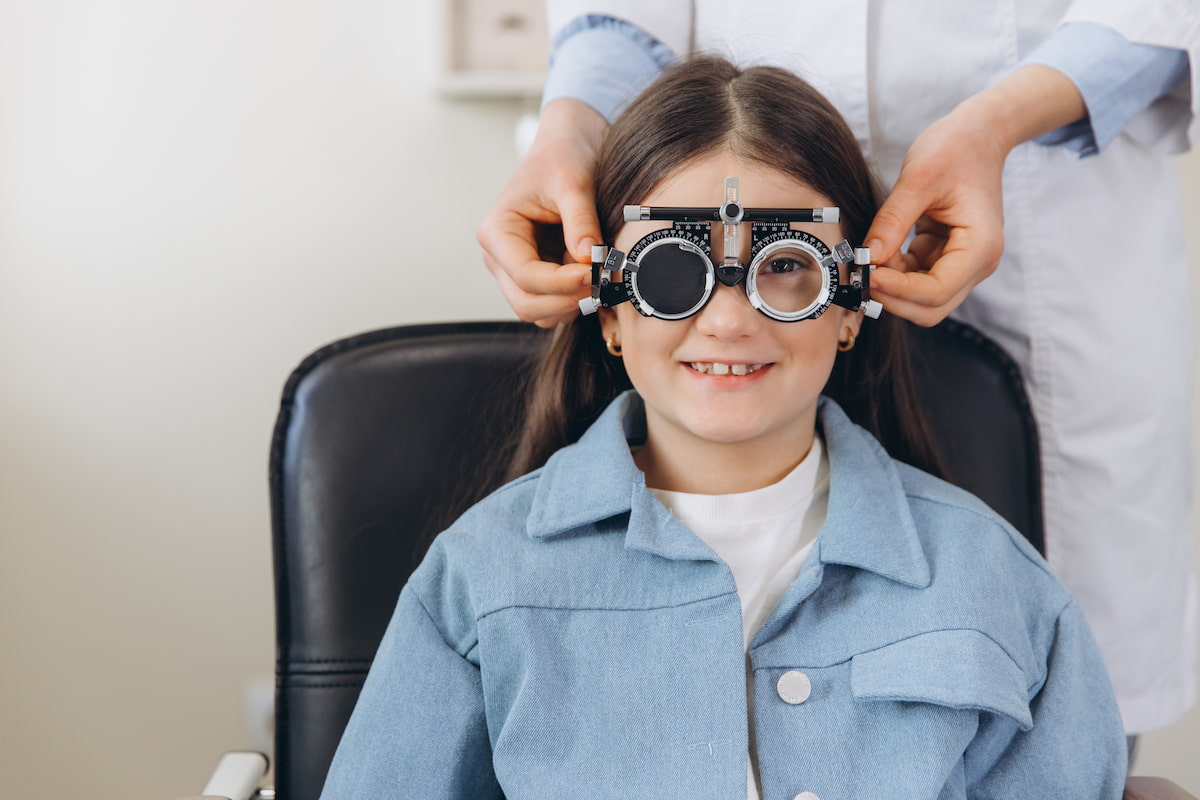
A comprehensive pediatric eye exam is more detailed. Instead of only checking whether your child can see letters at a distance, the eye doctor evaluates how your child’s visual system is working overall.
During an exam, the doctor may check visual clarity, eye alignment, focusing ability, eye movement, prescription needs, and overall eye health. This gives parents more complete information, especially if a child is struggling in school, avoiding reading, sitting close to screens, or complaining of blurry vision.
If your child does need glasses, we also offer children’s eyewear to help kids see clearly with frames that fit their needs and lifestyle.
Why can vision problems be missed at school?
Vision screenings are limited because they are meant to be fast and accessible for many children at once. They are not a substitute for one-on-one care with an eye doctor.
Some children also compensate well during a quick screening. They may guess letters correctly, rely on one eye more than the other, or only show symptoms during longer visual tasks like reading. That is one reason regular eye exams matter even when a child has not failed a school screening.
Parents who are unsure about timing can use general guidance on how often children need an eye exam to help decide when to schedule care.
When should parents schedule an eye exam?
Consider scheduling an eye exam if your child fails a school screening or if you notice signs such as:
- Frequent squinting or closing one eye
- Headaches after reading or screen time
- Holding books or devices very close
- Trouble keeping their place while reading
- Avoiding schoolwork or near tasks
- Complaints of blurry or double vision
- One eye turning in or out
Even without obvious symptoms, a comprehensive exam can help detect issues early, before they affect learning, confidence, or day-to-day comfort.
Help your child start the school year seeing clearly
A school vision screening is a useful checkpoint, but a comprehensive eye exam gives parents a clearer understanding of their child’s vision and eye health. If your child has failed a screening, is showing symptoms, or is due for routine care, our excellent optometrists provide pediatric eye care at our Overland office in St. Louis and St. Charles office. Schedule an eye exam to help your child see, learn, and feel their best.